
What is your sense?
You may have been taught, at some point, that there are five senses: sight, hearing, smell, Taste and touch. This has been known about over the centuries. Inevitably, because of research it has been found that this is a considerable understatement.
Neuroscientists don’t agree on exact numbers for it has been argued that there are nine, but some argue that there are over thirty. I am guessing that it isn’t about whether senses exist, it is about how different senses are being split. Here, for us, it will be interesting to just observe some of the more obvious ones.
Balance
When you stand on one leg, or walk along a low wall, you are balancing without even realising it. Your sense of balance is called equilibrioception. Interestingly your sense of balance is almost entirely associated with the vestibular system that is inside your inner ear, that tracks gravity and the movement of your head.
Have you ever stood up too fast, or spun round and noticed that strange sense (when as a child you spun round too fast?) For me, being deaf, I am aware that if I tip my head back I very quickly lose my sense balance.

Pain
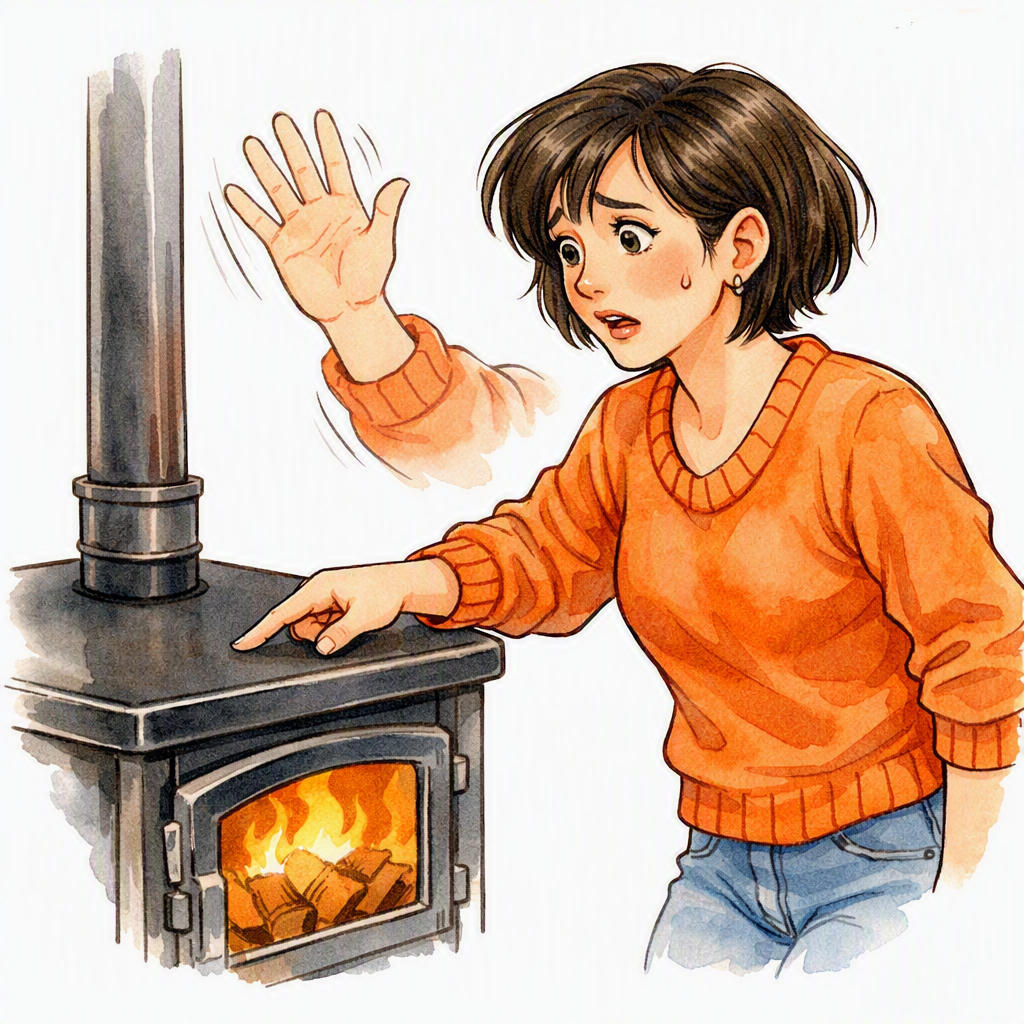
The sensing of pain, called Nociception, is as a result of receptors and nerve pathways that are different from our sense of touch (kinaesthetic).
In my experience being able to describe a sensation like pain can be exceptionally valuable – in particular if you are visiting a doctor. I can guarantee you have been asked “Where is the pain?” or “what does it feel like?’ “
Pain research increasingly distinguishes between fast sharp signals (like the stab of touching something hot) and the slower, duller paint that follows after that shock has passed (invariably a throbbing ache of some sort). Being able to describe which kind of pain you are feeling, and where the pain is, gives a doctor so much more to work on.
Temperature
The sensing of hot and cold is Thermoception – separate sensations from touch and /or pain, although the three overlap. Our bodies have separate receptors for detecting warmth or cold. You may have noticed that some people feel the cold more than others – you can be in the same room, and one person needs to be wrapped in woollies whilst the other is in a sleeveless thin garment.

Awareness of own body
This has been labelled Interoception by researchers. It is the awareness of what is happening inside your own body. Hunger. Thirst. A racing heart. A full stomach. A tense tummy. A need to breathe more urgently. These are all such important signals that are going on in your body even when you are not necessarily constantly aware of them.
Current research has linked interoception closely to emotional awareness. Much of what we experience as an emotion may actually begin as a physical, internal signal that the brain then interprets and labels. For instance have you ever felt ‘that sinking feeling’ (when you are feeling anxious)? Not coincidentally, this is close to the kind of awareness that this course has already been asking you to practice.
There are many more senses that are being researched (like time passing and navigation) but what matters here is that you spend time noticing those five main senses.
images by Ai